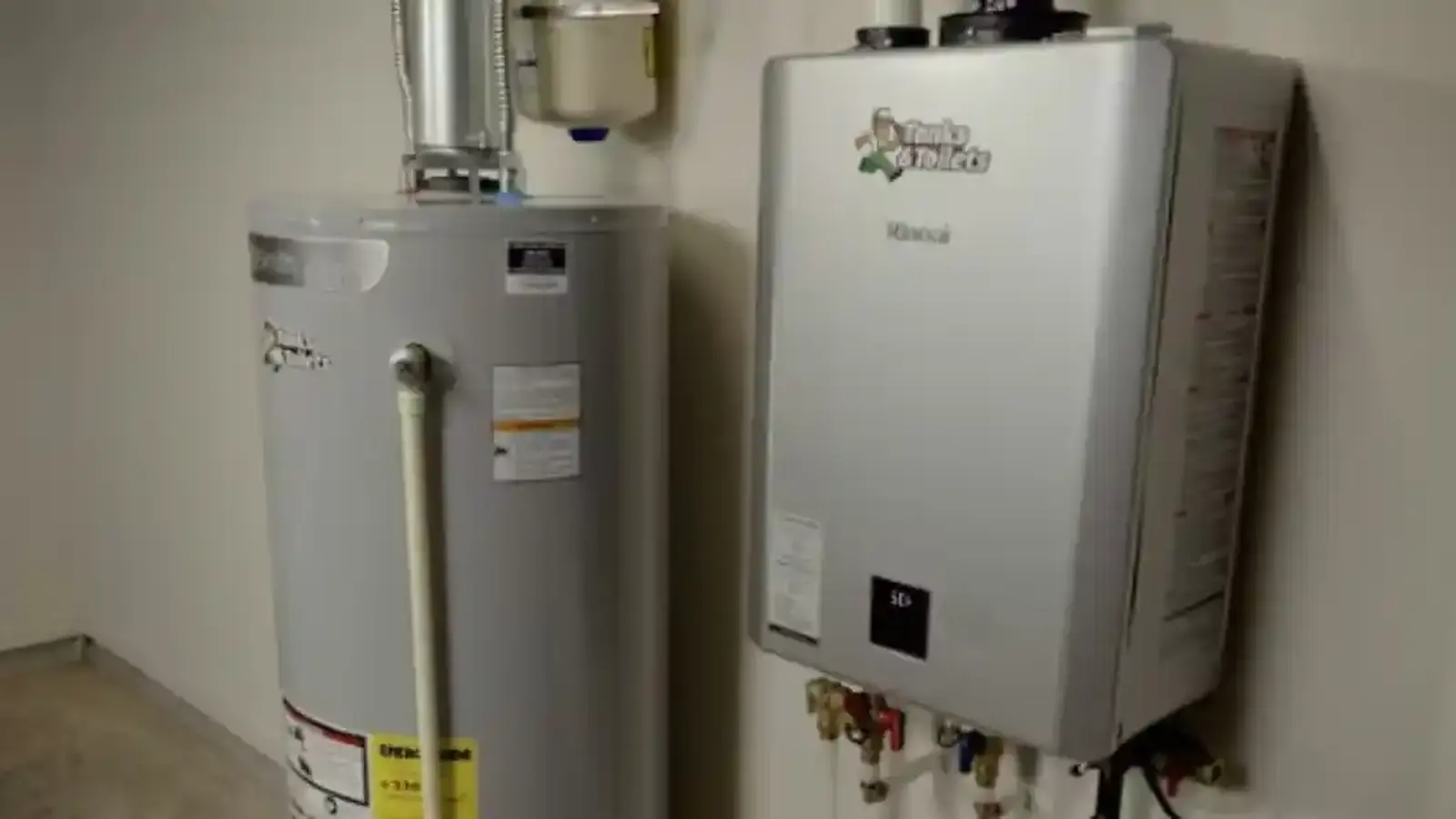
Why venting matters more on a tankless heater
A gas tankless water heater fires a large burner whenever hot water is drawn, and the exhaust carries carbon monoxide and water vapor. The vent is the path that carries those gases outdoors, so a poor vent is both a performance problem and a safety problem.
Many tankless units can be vented through a wall or the roof with a small-diameter pipe, but the type of pipe and the allowed length depend on the model. Always follow the manufacturer's instructions for the exact unit you buy.
Vent typesCondensing and non-condensing units
Non-condensing units are less efficient and produce hot exhaust, so they usually need stainless steel venting. Condensing units extract more heat from the exhaust, which cools it and creates acidic condensate, so they use plastic venting and need a drain for the condensate.
| Type | Vent material | Extra needs |
|---|---|---|
| Non-condensing | Stainless steel | Larger vent, hotter exhaust |
| Condensing | Plastic such as PVC or CPVC, per the maker | Condensate drain and sometimes a neutralizer |
| Electric | None | Heavy electrical circuit instead |
The right choice depends on the house. An existing vent that was sized for a tank heater may not suit a tankless unit, which is a reason to have the plumber look before you buy.
RoutesWhere the vent can go
The vent can run up through the roof, out a side wall or through a chimney chase, depending on the model. Each route has limits on length, number of elbows and distance from windows and air intakes.
A side wall vent is common in garages and utility closets and is usually the least expensive. A roof vent costs more and affects the roof, while an existing masonry chimney may need a liner. The plumber measures the run and counts the elbows to see what the unit allows.
Choose the location
The heater needs access, clearance and a route to outdoors.
Measure the vent run
Length and elbows are counted against the unit's limit.
Plan the termination
The exit point must keep clear of windows and intakes.
Plan the condensate
A condensing unit needs a drain for its condensate.
Gas line sizing and the meter
A tankless unit may draw more gas than a tank heater at its peak, and the line that fed a tank may be too small. The plumber checks the pipe size, the length of the run and the meter capacity before recommending a unit.
If the line is undersized, the unit can shut down under load, display error codes or fail to reach temperature. Fixing the gas line is a one-time cost that is better known before the purchase.
For a deeper look at the unit itself, see our tankless water heater page.
CondensateDraining the condensate
Condensate from a condensing unit is slightly acidic and needs to drain to a floor drain, a laundry standpipe or a condensate pump. Some systems include a neutralizer cartridge to bring the acidity to a safe level before it reaches household plumbing.
Plan the condensate route early, because a unit in a closet far from a drain may need a pump. A pump adds a part that can fail, so ask the plumber how it will be monitored.
Common mistakesVenting mistakes that cause problems
Using the wrong vent material for the unit is the most common mistake, because a condensing unit needs plastic that can handle acidic condensate and a non-condensing unit needs a metal vent that can handle heat. Using vent parts from a different brand can also void a warranty.
Too many elbows or too long a run restricts exhaust and triggers error codes. A vent that ends too close to a window, a soffit or an air intake can pull exhaust back into the house. Ask the plumber to show you the vent route on paper before cutting any wall.
ChecklistWhat to bring to a tankless planning visit
- The make and model of the existing heater and its vent route.
- A photo of the gas meter and the gas line to the heater.
- A list of the fixtures that run at the same time in a busy morning.
- The location you have in mind, with a note about nearby windows and air intakes.
- Any manual or spec sheet for the tankless unit you are considering.
With those items in hand, a plumber can tell you in one visit whether the vent, the gas and the electrical supply support the unit, and what each change would add to the job.
If the answer is that a tankless unit is a poor fit, that is useful too. A tank heater that is sized and vented correctly is often a better value than a tankless unit squeezed into a space it was not designed for.
MistakesPlanning mistakes that add cost later
Buying a unit before checking the gas line and the vent route is the most expensive mistake, because a unit that does not fit the house cannot be returned once it is installed. A short planning visit costs far less than a change order.
Another is assuming the old vent will work. Tank heaters often use a large draft hood vent, while tankless units need a vent made for them, and the two are not interchangeable.
Local notesPermits, inspections and sizing
Venting is inspected in many places because a bad vent is dangerous. Plan for a permit and an inspection, and give the plumber time to schedule them.
Euless notes on permits and water quality
The City of Euless building department can tell you whether a tankless installation needs a permit and an inspection at your address. Ask before you buy a unit, because a permit requirement can affect the schedule.
Euless buys its main water supply from the Trinity River Authority, which draws from Cedar Creek and Richland Chambers reservoirs, and also runs city wells in the Trinity Aquifer, according to the city. Mineral content varies, so test your tap and read the city's annual water quality report to plan how often to flush the unit.
Questions about tankless venting in Euless
Sometimes, but a vent sized for a tank heater may not suit a tankless unit. The plumber checks the vent type, size and condition before reuse.
Often yes. Tankless units draw a large gas load at once, so the line size, length and meter capacity should be checked.
It is water formed when exhaust cools in a condensing unit. It drains to a floor drain or a condensate pump and may pass through a neutralizer.
Ask the City of Euless building department for your address. The plumber can explain what is usual.
If you are weighing tankless against a new tank, read about water heater installation and the tankless page. We also install in Hurst, and our Euless homepage explains how dispatch works.