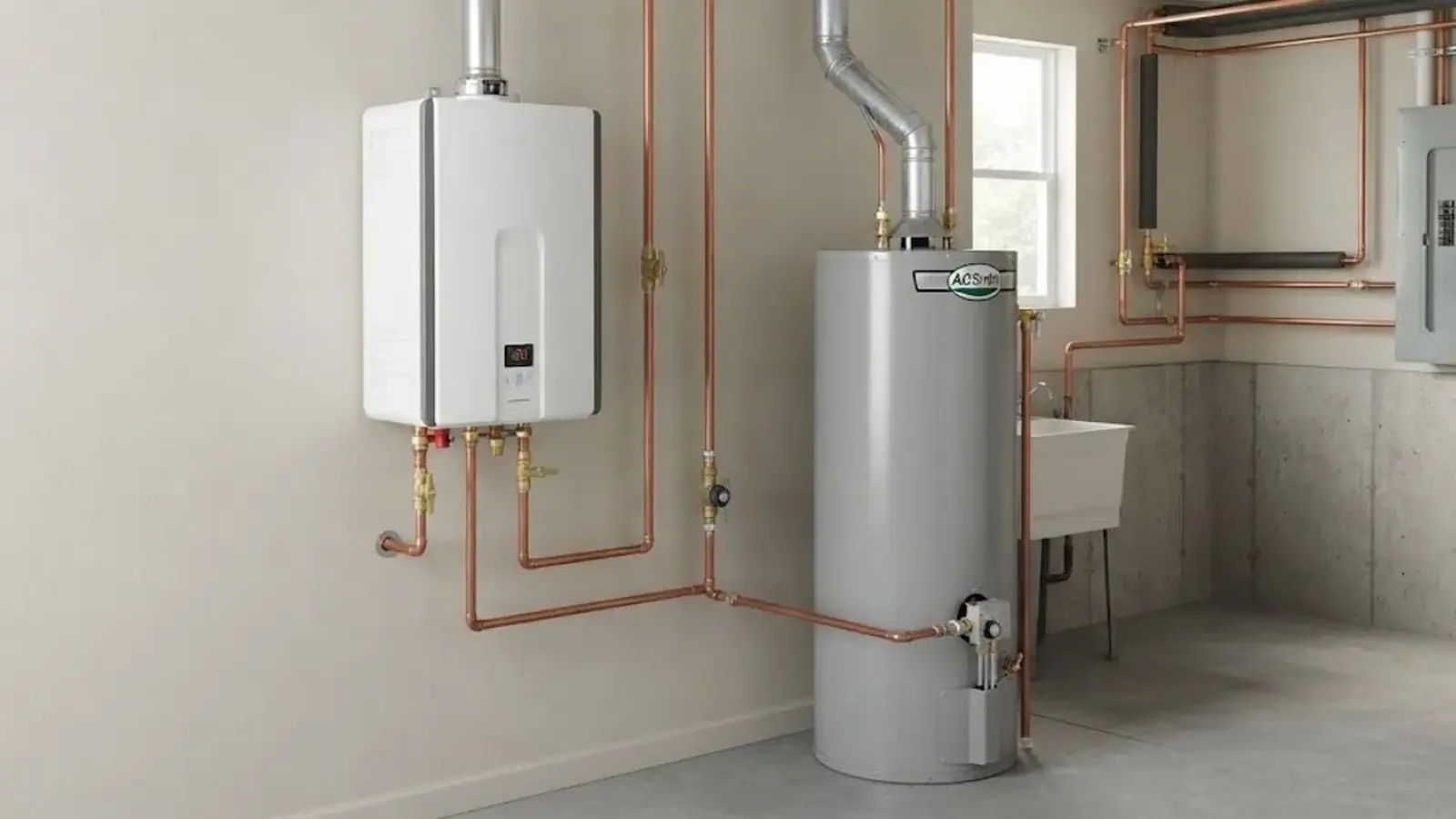
What a tankless water heater does differently
When a tap opens, a flow sensor starts the burner or the electric elements and water heats as it passes through a heat exchanger. The unit shuts off when the flow stops, which is why there is no standby loss.
The limit is the flow rate. A unit sized for one shower may struggle if a washing machine and a dishwasher run at the same time, so sizing by the number of fixtures matters more than the family size.
InstallationGas, venting and sizing for a tankless unit
Gas tankless units draw a large gas load in a short time, so the existing gas line may need to be upsized. They also need a vent made for condensing or non-condensing exhaust, depending on the model.
Electric units can avoid venting but may need heavy circuits that an older panel cannot supply. We check the gas line, the vent route and the electrical panel before recommending a unit.
| Check | Why it matters |
|---|---|
| Gas line size and length | A small line starves the burner and triggers errors |
| Vent type and route | Exhaust must leave the house safely and drain condensate |
| Electrical capacity (electric units) | Heavy circuits may need a panel upgrade |
| Peak flow demand | Simultaneous showers and appliances set the unit size |
Thinking about tankless?
Call to talk through sizing, gas supply and venting for your house.
Flushing and descaling a tankless heater
Minerals in water cling to the heat exchanger as scale. A flush circulates a descaling solution through the unit and clears it, which restores flow and lowers the chance of an error code.
Manufacturers commonly recommend a flush on a regular schedule, and hard water shortens the interval. Euless draws from the Trinity River Authority and city wells, and the mineral content of your own tap can vary, so a home test and the city's water quality report help set the schedule. A flush visit takes about an hour in most homes.
Isolate the unit
Service valves shut the heater off from the house.
Circulate solution
A pump moves descaler through the heat exchanger.
Rinse
Clean water flushes the loop and the filter screen is cleared.
Test
Flow and temperature are checked before the unit goes back in use.
Error codes, cold sandwiches and fluctuating heat
Error codes usually point to an ignition fault, a vent problem, a flow sensor or scale. Water that goes hot and cold during a shower often means a flow rate that is too low for the burner to hold a steady temperature.
A plumber reads the code, checks the vent and the screens and then tests the sensor and igniter. A scaled heat exchanger is the most common cause of poor performance, and a flush often solves it.
TradeoffsIs tankless right for your house
Tankless units often last longer than tank heaters when they are maintained, and they free up floor space. They also cost more to install, and the savings depend on how much hot water you use.
If the existing heater is a failed tank, a swap to a new tank is often faster. A planned upgrade is the better time to move to tankless, as our installation page explains.
Questions about tankless water heater in Euless
Yes. Scale builds up inside the heat exchanger and reduces flow and efficiency. A periodic descaling flush clears it, and hard water calls for a shorter interval.
Not in the usual sense, but it can fall behind if too many fixtures run at once. Sizing the unit to peak demand prevents that.
Often yes. Tankless units draw a large gas load at once, so the line size and length need to be checked before installation.
Often yes. The code points to a fault such as ignition, venting, a flow sensor or scale, and the plumber tests each.
If your current tank has already failed, read about water heater replacement. If you have a working tank that is simply getting old, water heater repair explains when a fix still makes sense. We also serve Hurst.