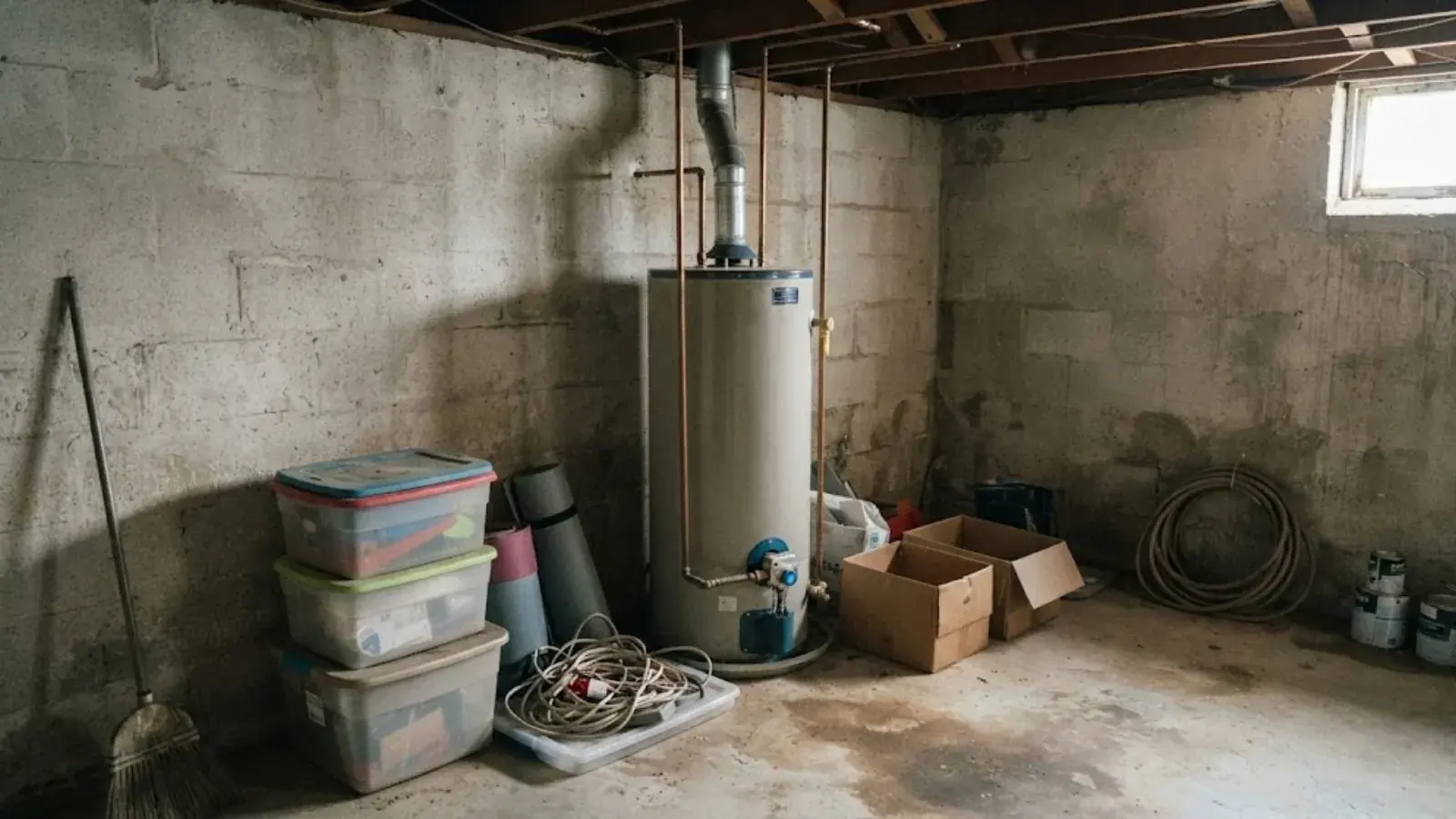
No hot water: the usual causes
On a gas heater, a pilot that will not stay lit often points to a worn thermocouple or a dirty burner. On an electric unit, a tripped breaker, a failed upper thermostat or a burned-out heating element are the usual suspects.
Lukewarm water can mean a failed lower element or a heavy layer of sediment at the bottom of the tank, which insulates the water from the burner or element. A plumber checks the power or gas supply first, then tests the controls before recommending a part.
No heat at all
Check the breaker or gas valve, then look for a tripped limit switch.
Water runs out fast
A failed element or heavy sediment shrinks the usable hot water.
Rumbling or popping
Sediment baked on the tank floor boils and bangs as the burner fires.
Rusty hot water only
Rust in hot water alone points to a corroding tank interior.
Water heater leak: what to do first
A leaking water heater is one of the most common reasons people call us after hours. The source matters, because a loose fitting or a dripping relief valve is a repair, while water seeping from the tank body means the tank has failed.
Switch off the power at the breaker or turn the gas control to pilot or off, close the cold-water shutoff above the heater and place a pan under any drip. Do not cap the relief valve line, because that valve protects the tank from excess pressure.
While you wait for the plumber
Shut off the cold supply, switch off power or gas, and move stored boxes away from the base. Dry standing water on the floor, since a wet floor near an electric heater is a shock hazard. If the heater sits in a garage, keep the garage door open to dry the slab.
No hot water or a leaking tank?
Call the 24/7 line. The dispatcher will ask a few questions about the heater and send a plumber when one is available.
Repair, flush or replace the heater
A tank that is under about eight years old and leaking from a fitting is usually worth repairing. A tank that is more than ten years old and leaking from the body is a candidate for water heater replacement, because the steel liner has failed and no part can fix it.
Between those ages, the decision turns on what failed. A new element or thermostat on a middle-aged tank can add years of service, while a corroded tank wastes money on every repair.
| Problem | Typical fix | Replace when |
|---|---|---|
| Pilot will not stay lit | New thermocouple or burner cleaning | Tank also leaking or rusted |
| Lukewarm water, electric | New heating element or thermostat | Elements keep failing in a short time |
| Dripping relief valve | Replace valve, check pressure | Pressure stays high, add expansion control |
| Water at tank base | Tighten fittings, find the source | Seepage from the tank shell |
Sediment, hard water and the tank's lifespan
Euless buys its main water from the Trinity River Authority, which draws from Cedar Creek and Richland Chambers reservoirs, and also runs city wells in the Trinity Aquifer according to the city's public works page. Minerals vary by source, so test your own tap and ask the city for its latest water quality report before you decide on a softener.
Whatever the water, sediment collects at the bottom of every tank. A yearly drain and flush slows that buildup and helps the heater run quietly, and it is the cheapest way to add life to an older tank.
SafetyGas smell, carbon monoxide and when to leave
If you smell gas near the water heater, leave the house first and call the gas utility or 911 from outside. Do not flip switches or look for the leak yourself, and call us only after the gas company says the home is safe.
A gas heater that backdrafts can release carbon monoxide, so a scorched draft hood, soot at the vent or a working CO alarm that sounds near the heater all mean the unit should be shut off and inspected before it is used again.
CostWhat decides the cost of a water heater repair
Questions about water heater repair in Euless
Yes. The line answers 24/7. A leaking tank is treated as urgent, and a licensed plumber can be sent the same day when one is available, including evenings and weekends.
Many tanks run roughly eight to twelve years, depending on water quality and maintenance. Flushing the tank and replacing the anode rod on schedule can extend that range.
A leak at the base can come from a fitting, the drain valve or the tank itself. If the shell is leaking, the tank has failed and needs replacement.
Often not, if the problem is a leaking tank. A small repair on a sound tank can still make sense, and the plumber can show you the repair cost against a new unit.
If the diagnosis is a failed tank, our replacement page explains sizing and what a swap involves. If you are considering a unit that heats on demand, read about tankless water heaters. We also answer water heater calls in Hurst.