What to do in the first five minutes
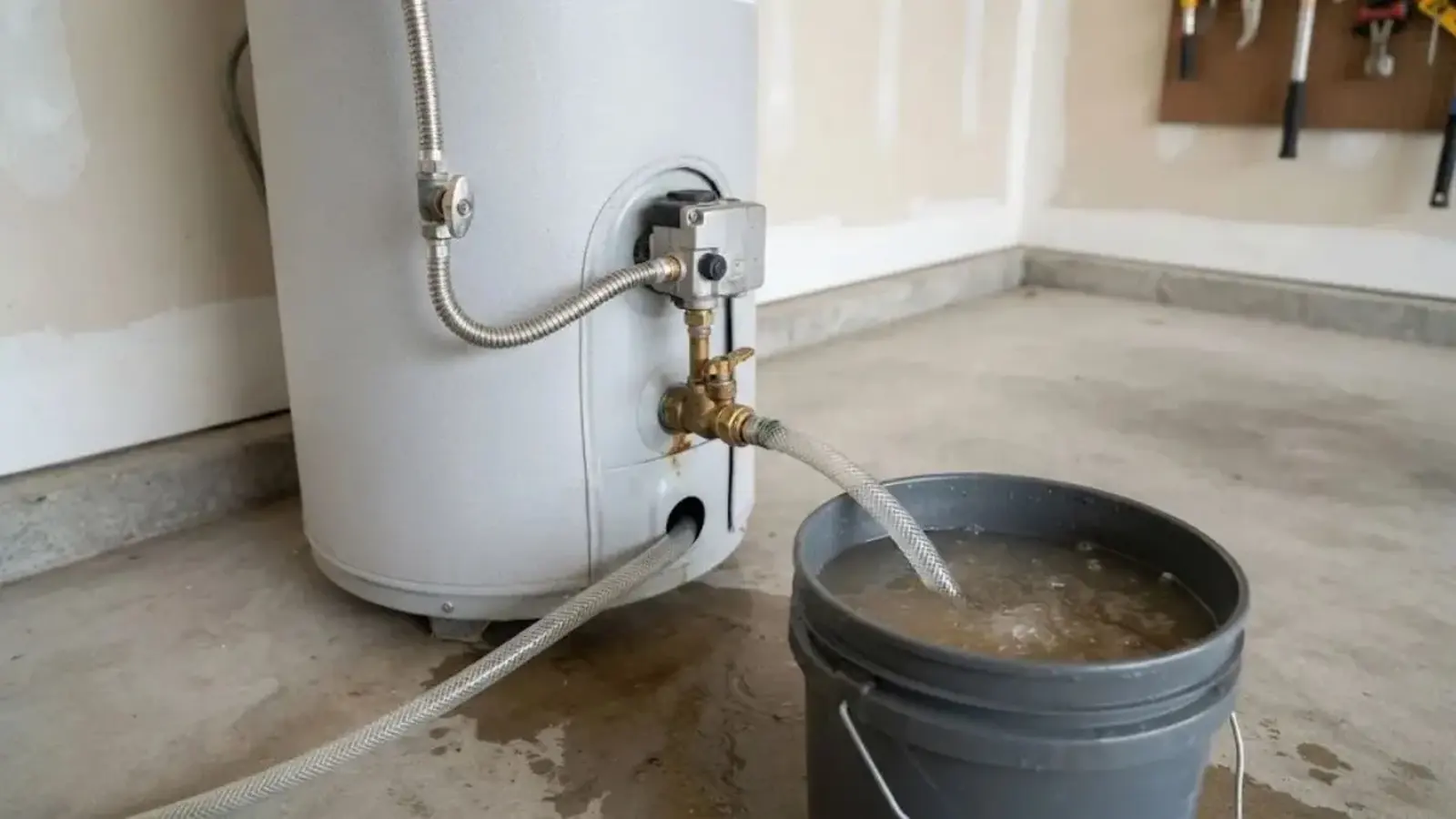
Turn off the power at the breaker or set the gas control to pilot, and close the cold-water valve on top of the heater. Drain the tank partway if the leak is heavy, using a hose from the drain valve to a floor drain.
Then dry the floor and find where the water is coming from. A flashlight and a dry paper towel pressed along each connection shows even a slow drip.
Safety first
Do not touch an electric heater while standing in water. Switch off the breaker from a dry spot, and if you cannot reach the panel safely, call a plumber or the electric utility. For a gas heater, set the control to pilot or off, and leave the house if you smell gas.
Where the leak is and what it means
Water collects at the bottom no matter where it originates, because it runs down the tank. Look above the floor for the actual source before deciding.
| Source | Signs | Repair or replace |
|---|---|---|
| Cold or hot supply fitting | Drip at the top connections | Tighten or replace the fitting |
| Relief valve or its pipe | Water at the valve or discharge pipe | Replace the valve, check pressure |
| Drain valve at the bottom | Drip from the valve outlet | Tighten or replace the valve |
| Tank body | Water seeping from the base or seams | Replace the water heater |
A leak from the tank itself means the steel liner has corroded through, and it cannot be patched. See our water heater replacement page for what a swap involves.
The relief valveDripping from the temperature and pressure relief valve
The relief valve opens to release excess pressure or temperature, and it can drip if pressure is high, if the valve is worn or if thermal expansion has nowhere to go. A discharge pipe that runs to a safe place should carry that water away.
Never cap or plug the discharge line. A plumber measures the water pressure and checks for an expansion tank when a relief valve drips, because a failing valve and high pressure can look the same.
SedimentWhy tanks fail from the bottom
Sediment settles at the bottom of the tank and traps heat against the steel. Over years, it contributes to corrosion at the base, which is where tanks usually begin to leak.
Flushing the tank once a year removes some sediment and slows that process. If your tank is more than ten years old and has never been flushed, a flush is not likely to save it, and replacement planning makes sense.
Turn off power or gas
Do this before draining.
Connect a hose
Run it from the drain valve to a floor drain or outside.
Open and drain
Let the water run until it is clear.
Close and refill
Close the valve, refill and restore power.
What to tell the plumber when you call
- The age of the heater, if you know it, and whether it is gas or electric.
- Where the water is showing and how fast it is coming out.
- Whether the leak started suddenly or has been growing.
- Where the heater sits and what is below it.
- Whether you have shut off the water and the power or gas.
These details help the dispatcher decide how urgent the call is and let the plumber bring the right parts and, if needed, a replacement tank. A heater in an attic over a finished ceiling is a different call from one on a garage slab, and a plumber who knows that in advance can plan the visit.
MistakesMistakes to avoid with a leaking tank
Plugging or capping the relief valve line is dangerous, because that valve is the tank's pressure protection. Never block it, even to stop a drip.
Another is ignoring a small leak because the floor dries quickly. A tank that weeps a little is often close to failing, and the next leak can be a flood.
Repair or replaceIs it worth repairing
A fitting or valve leak on a tank under about eight years old is a repair that makes sense. A body leak on any tank is a replacement, and so is a leak on a tank more than about ten years old that is rusting at the seams.
If the heater is in an attic or on a second floor, call quickly. A tank full of water can release gallons through a ceiling, and the damage grows while you wait. Our water heater repair page explains the usual fixes.
Euless notes on water supply and permits
Euless buys its main water supply from the Trinity River Authority, which draws from Cedar Creek and Richland Chambers reservoirs, and the city also runs wells in the Trinity Aquifer, according to its public works page. Mineral content varies, so test your tap and read the city's annual water quality report to judge how fast sediment may build in your tank.
Ask the City of Euless building department whether a replacement needs a permit at your address, and verify that your plumber is licensed through the Texas State Board of Plumbing Examiners public search before work starts.
Questions about leaking water heaters in Euless
No. Shut off the power or gas and the cold-water valve, and call a plumber. A leaking tank can fail suddenly.
Dry the heater and check each connection with a paper towel. A leak at a fitting is usually above the tank, while water seeping from the seams or base is the tank.
High pressure, thermal expansion, a worn valve or sediment on the seat are common causes. A plumber tests the pressure and the valve.
Not until the source is fixed. Refilling a tank with a leak can damage the heating element or burner.
If the tank has failed, see water heater replacement. For a fitting or valve leak, call about water heater repair. We also serve Hurst, and our Euless homepage lists the rest of the area.