Signs of a slab leak
Slab leaks are hidden by design, so the evidence is indirect. Callers describe a warm patch on a tile or a hardwood floor, a water bill that jumped, a sound of running water when everything is off, a damp carpet or cracks in the grout and baseboards.
Warm spot on the floor
A leaking hot-water line heats the slab above it.
Running meter, all taps off
Water is leaving the system somewhere.
Damp flooring or musty smell
Water is rising through the slab or the joints.
Low pressure
A large leak can lower pressure throughout the house.
What to do when water comes through the floor
If water is visible on the floor and rising, shut off the main water valve at the house or at the street side of the house, where your supply enters. The meter box valve at the curb belongs to the utility, so use the home shutoff first.
Turn off the water heater to protect it from running dry, lift valuables off the floor and call. Our dispatcher can send a plumber the same day when one is available, including nights and weekends.
Protect the home while you wait
Close the main valve, switch off the water heater, move rugs and furniture off the wet floor and photograph the damage. Run a fan if you have one to start the drying.
Water coming through the floor?
Call the 24/7 line. The dispatcher will tell you what to shut off and send a plumber when one is available.
Why North Texas slabs leak
Most North Texas homes are built on slab foundations, and the soil beneath them is expansive clay. Clay swells when wet and shrinks when dry, and the slab moves with it, which can stress pipes that run through or beneath it.
Pipe material and workmanship matter too. Copper under a slab can corrode, and a line rubbing against concrete or a gravel bed can wear through over years. Dry spells followed by heavy rain are a classic time for foundation movement, so a sudden new leak after the weather swings is not unusual.
Finding itHow we find a slab leak
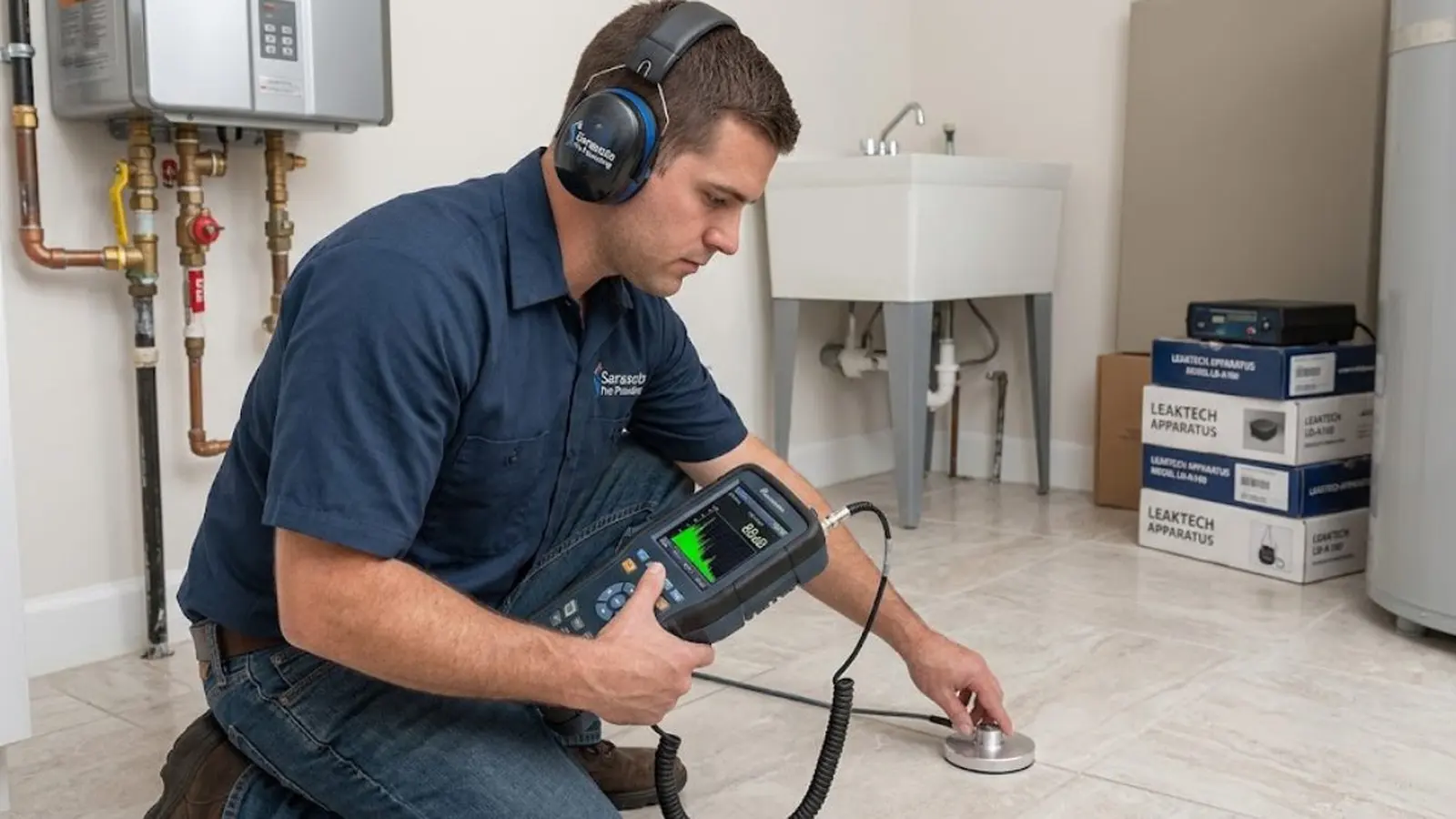
A plumber begins by isolating the system to confirm that water is leaking, then uses acoustic listening, thermal imaging and pressure tests to narrow the location. The goal is a mark on the floor within a foot or two of the leak.
| Step | What it tells you |
|---|---|
| Meter and pressure test | Confirms a leak and the line it is on |
| Acoustic listening | Pinpoints the sound of the leak through concrete |
| Thermal camera | Shows a warm path from a hot-water leak |
| Line isolation | Separates hot, cold and branch lines |
Once the leak is marked, the plumber explains the repair options and prices. See our leak detection page for the tools we use on any hidden leak.
RepairRepair options: break the slab, reroute or line
A spot repair opens the slab over the leak, replaces the damaged section and patches the concrete. A reroute abandons the failed line and runs a new one through the attic or walls, which avoids concrete but opens drywall.
If the house has repeated leaks or aging copper, a repipe can address all the lines. A line that is leaking only at one spot on a sound system is usually best repaired in place.
Isolate and test
The leaking line is confirmed and shut off.
Choose the method
Spot repair, reroute or repipe is matched to the damage.
Make the repair
The new section or line is installed and tested.
Restore
Concrete or drywall is patched, and flooring is a separate job.
Insurance, flooring and documentation
Slab leak coverage varies by policy. Some policies pay for the resulting water damage and for access to the pipe but not for the pipe repair itself, so ask your insurer before work begins.
Keep the plumber's written report, the photos and any moisture readings. If flooring needs replacement, the report supports the claim.
Questions about slab leak repair in Euless
Yes. Dispatch is open 24/7. If water is on the floor or the meter is spinning, a licensed plumber can be sent the same day when one is available, including nights and weekends.
Often yes. A reroute through the attic or walls avoids the slab, and a pinpointed spot repair opens a small area.
A warm floor spot, a spinning meter with everything off and low pressure are common signs. A pressure test and acoustic listening confirm it.
A long-running leak can wash out soil beneath the slab and soften the base. Fixing it early limits that risk.
Related work includes water service line repair for the yard side of the meter and burst pipe repair for a pipe that has split inside the house. We also respond to slab leaks in Hurst.