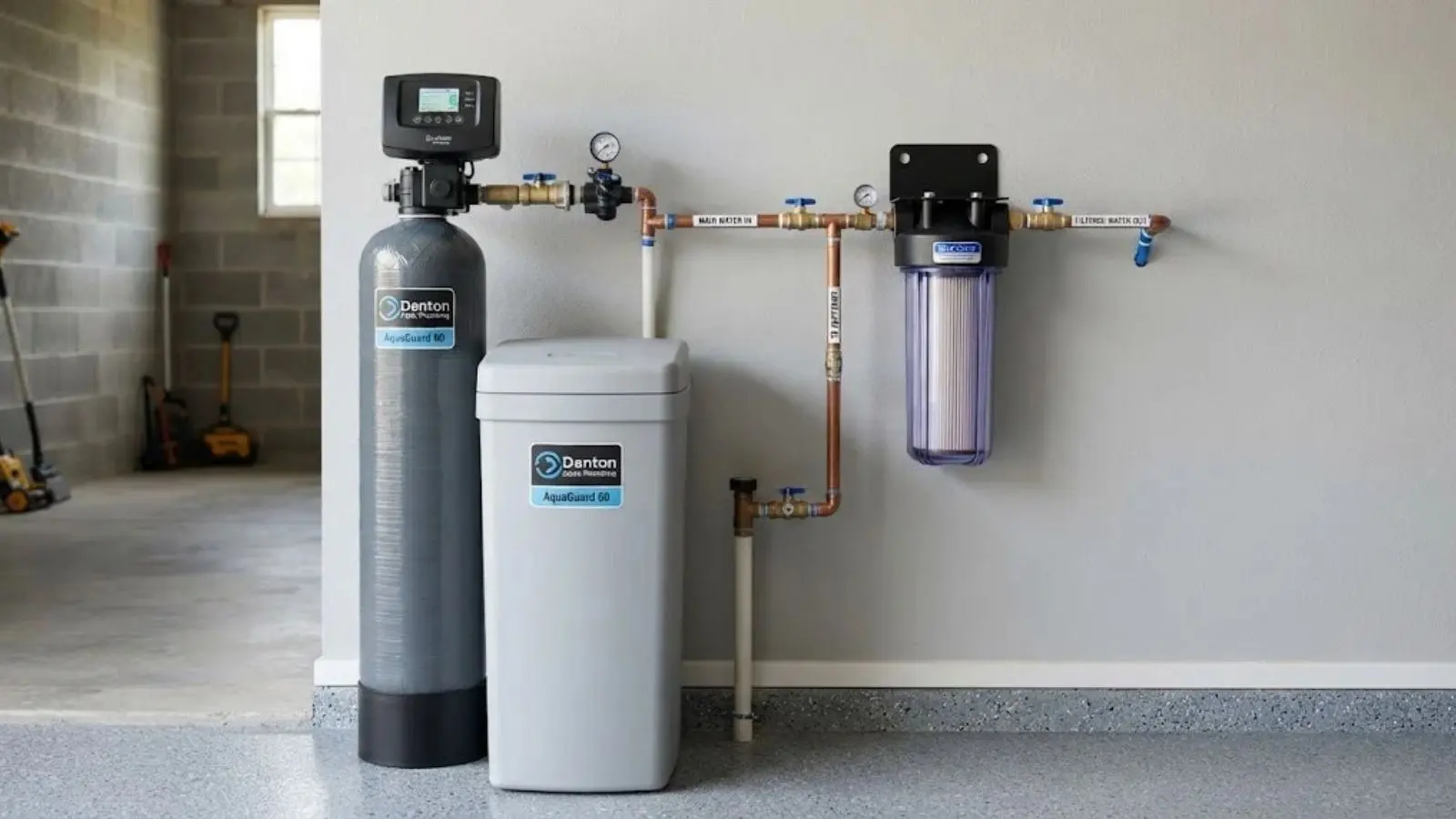
Test your tap before buying a system
Mineral hardness is the reason for most scale, and it varies by water supply. Euless buys its main supply from the Trinity River Authority, which draws from Cedar Creek and Richland Chambers reservoirs, and the city also operates wells in the Trinity Aquifer, according to its public works page.
The city's annual water quality report describes what is in the water as it leaves the city's system, and a home test shows what arrives at your tap. Use both to decide whether a softener, a filter or nothing at all fits your home.
SymptomsWhat the symptoms mean
| Symptom | Possible cause | Option |
|---|---|---|
| White scale on faucets and glass | Mineral hardness | Water softener |
| Chlorine taste or smell | Disinfectant in the supply | Carbon filter |
| Sediment or particles | Particles from lines or the supply | Sediment filter |
| Stained fixtures | Iron or other minerals | Test, then match the system |
A softener swaps hardness minerals for sodium or potassium, and a carbon filter reduces chlorine taste and some chemicals. They solve different problems, so a system that treats the wrong one wastes money.
Hard water or taste problems?
Call to talk through testing and system options.
Softener, filter or both
A salt-based softener removes the minerals that cause scale and can protect water heaters and fixtures. A salt-free conditioner changes how minerals behave but does not remove them, so results differ.
A whole-house carbon filter treats water before it reaches every tap, and a point-of-use filter at the kitchen sink is a lower-cost option for drinking water. Some homes use a filter and a softener together.
Test
A home test and the city report show what to treat.
Choose
The system is matched to the problem.
Install
Bypass valves, drains and connections are set.
Set up and explain
Regeneration, salt and filter changes are explained.
Softener and conditioner repairs
A softener that stops softening may have a salt bridge, an empty brine tank, a clogged injector or a control valve fault. A salt bridge is a hard crust in the salt that stops the brine from forming, and breaking it often restores the unit.
If a unit is old and failing repeatedly, replacement may be cheaper than another repair. We service common brands and explain what is worth fixing.
Living with itMaintaining a softener or filter
A salt-based softener needs salt added to the brine tank, and the level should be checked every month or two. Use the salt type the manufacturer recommends, because some products leave residue that clogs the injector.
Whole-house filters need new cartridges on a schedule, and a filter that has gone too long between changes can restrict flow and hold back contaminants rather than catching them. Write the change dates on the housing so you do not have to remember.
Water treatment equipment drains to the household sewer, so the discharge has to run to a proper drain with an air gap. Ask the plumber to show you the bypass valve, in case you need to isolate the unit during a repair.
CostsWhat to expect on price
Questions about water softener and filtration in Euless
Test your tap and read the city's annual water quality report to see what applies at your address. Mineral content varies with the source and the season.
A softener addresses mineral hardness, and a filter addresses taste, odor or particles. A water test shows which one you need.
Often yes. Salt bridges, a clogged injector or a control valve fault are common causes and can be checked.
Softened water can reduce scale buildup inside a heater and extend its life. The plumber can explain what to expect.
If scale is building up in a tankless unit, see tankless water heater flushing. If your tank is failing, read about replacement. We install systems for homes in Hurst as well.