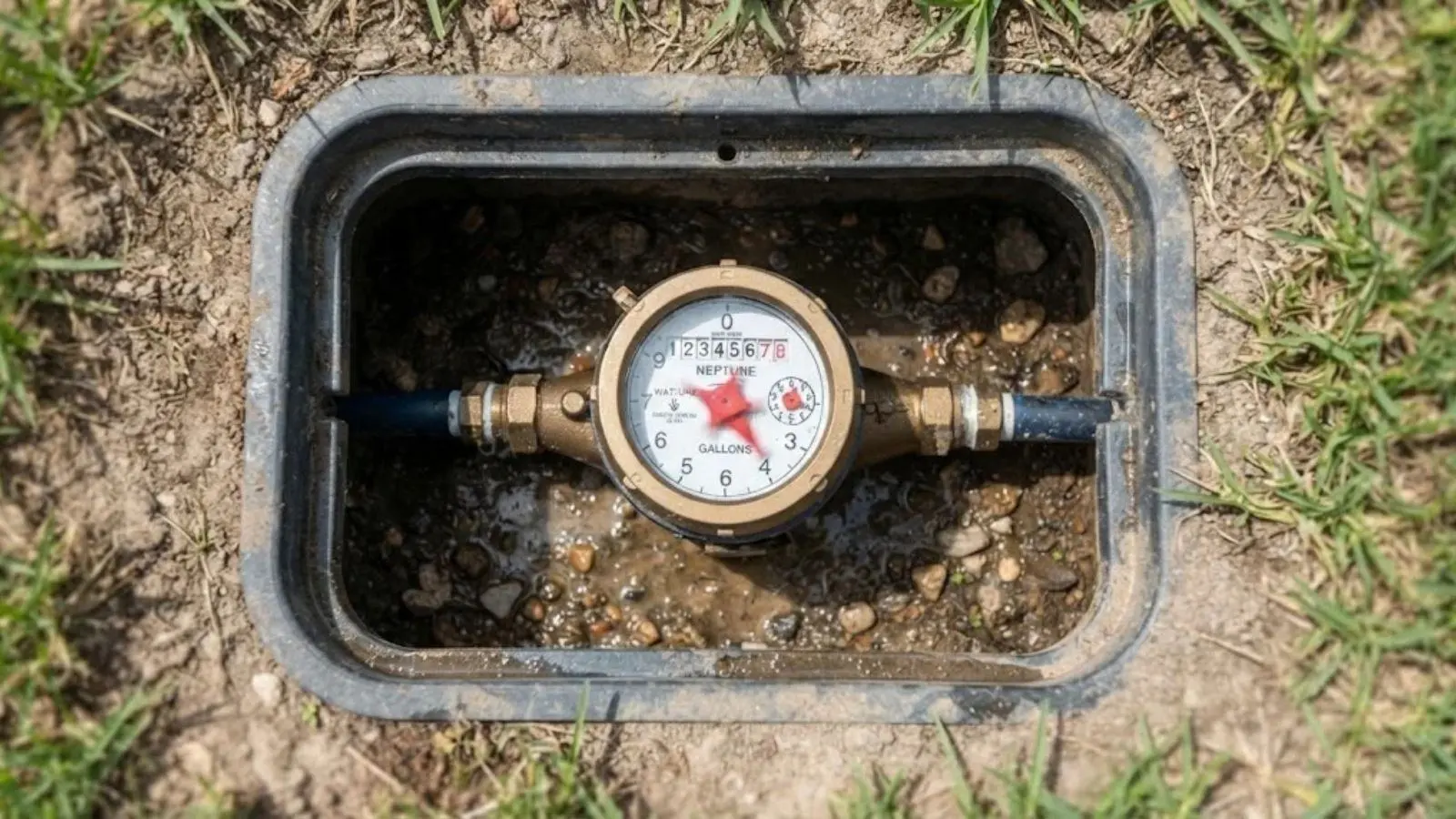
Run the water meter test
Turn off every faucet and appliance, including the ice maker, the washer and the irrigation system. Then open the meter box and look at the low-flow indicator, a small triangle or dial, or note the reading and check it again after fifteen minutes.
If the indicator moves or the number changes, water is leaving the system somewhere. If it does not move, the extra use is inside the house, and the cause may be a fixture that runs part of the time.
Turn off all water use
No faucets, appliances or sprinklers.
Read the meter
Note the number or the low-flow dial.
Wait fifteen minutes
Do not use any water.
Read it again
Any change means a leak.
The usual suspects
A running toilet is the most common cause, and it can waste hundreds of gallons a day without making much noise. A drip from a faucet, a leaking water heater and a failed sprinkler valve are close behind.
| Where | How to check |
|---|---|
| Toilet | Add food coloring to the tank and wait, color in the bowl means a leak |
| Irrigation | Turn the system off and recheck the meter |
| Water heater | Look for water at the base and at the relief valve |
| Outside faucets | Check for drips and damp ground |
| Under the slab or in a wall | Meter moves with all fixtures off and nothing visible |
For toilets, our toilet repair page explains the flapper and fill valve fixes that stop the usual leak.
Hidden leaksWhen the leak is in a wall, a slab or the yard
If the meter moves with every fixture and the irrigation shut off, the leak is in a line you cannot see. Warm floor spots, a sound of running water, damp walls and a low-pressure house are clues.
A plumber uses acoustic listening, thermal imaging and pressure tests to find the leak without tearing out surfaces. Our leak detection page explains the tools. A leak in the yard between the meter and the house is a water service line repair.
SeasonalWhy summer bills can run high
Irrigation and extra showers push use up in summer, so compare your bill with the same month last year before you assume a leak. A big jump compared with the same period, with no change in the household, is a better signal.
A sprinkler line that cracks can leak quietly for weeks, because the water goes into soil. Check the zones by running each one and looking for puddles or geysers.
Reading the billWhat your water bill can tell you
Look at the usage figure, not just the dollar amount, and compare it with the same month in earlier years. A rise in gallons that matches a new household member or a pool fill is explained, and a rise with no explanation is not.
If your bill lists daily or monthly usage, a steady flow of water at night when everyone is asleep points to a leak. A bill that was normal and then stepped up and stayed high suggests a leak that began on a specific date, which can help a plumber narrow the cause.
Toilet testA two-minute toilet leak test
Toilets are the most common hidden leak, and the test takes almost no time. Lift the tank lid, add a few drops of food coloring to the tank and wait ten to fifteen minutes without flushing. If color appears in the bowl, the flapper is leaking.
- Replace the flapper first, because it is the cheapest part.
- Check the fill valve if water keeps running into the overflow tube.
- Retest after the repair to confirm the leak is gone.
- Test every toilet in the house, not just the one you use most.
A flapper leak can waste a large amount of water every day, and it does not make an obvious sound. That is why a bill that rises quietly is so often a toilet and so seldom something dramatic.
MistakesMistakes that delay finding a leak
Assuming the utility made a billing error without checking the meter delays the fix. Read the meter yourself first, and ask the city to verify its reading if the numbers do not match.
Ignoring a small increase is the other. A leak that adds a little to the bill each month is usually growing, and the cheapest time to fix it is now.
ActingWhat to do once you suspect a leak
If you find a running toilet or a dripping fixture, repair it and watch the next bill. If the meter test shows a leak you cannot find, shut off the main water valve when you leave the house, and call a plumber.
Keep your bills, the meter readings you took and any photos. They help a plumber narrow the search and help your insurer or utility understand the timeline.
Euless notes on bills, meters and questions
The City of Euless public works water and wastewater division is responsible for testing and maintaining the city's water and wastewater lines, according to the city, and the department that handles the water bill can tell you how the meter was read. If you believe a reading is wrong, ask the city to verify it before you assume the leak is inside the house.
Ask the city whether it offers any billing review for a leak that has been found and repaired. Programs vary by city and change over time, so confirm before counting on one.
Questions about high water bills in Euless
A leaking toilet, a broken sprinkler line, a leak in a wall or under the slab or a change in use are the usual causes. A meter test separates them.
Turn off all water use, read the meter or the low-flow dial and recheck after fifteen minutes. Any movement means a leak.
Yes. A large leak under the foundation can raise a bill sharply and may not show any surface sign.
Ask the city. Billing review rules vary and can change, so confirm what applies to your account.
If the meter is still moving, call about leak detection. For a hidden slab leak, see slab leak repair. We also serve Hurst, and our Euless homepage lists the rest of the area.