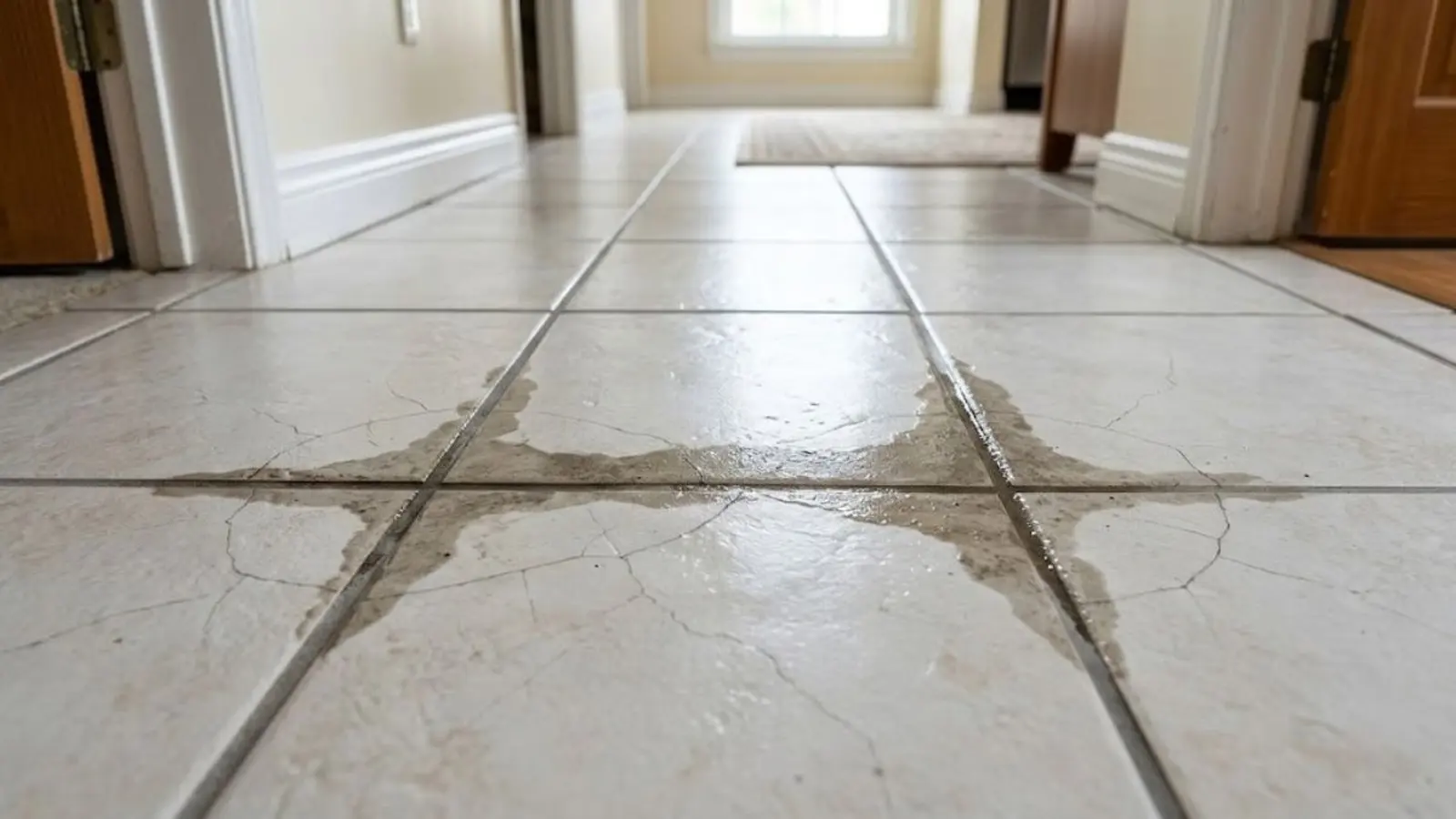
What a slab leak is
In many North Texas homes, water supply lines run in or beneath the slab to reach the kitchen, bath and water heater. When one of those lines corrodes, wears or is stressed by foundation movement, water leaks into the soil and the concrete.
Because the leak is under the floor, there is often no visible damage until it has run for a while. That is why the first signs are usually on the bill and underfoot, not on the ceiling.
SignsWarning signs to watch for
A warm spot on the floor
A hot-water line leaking under the slab warms the concrete above it.
The meter moves with everything off
Water is leaving the system.
The sound of running water
You hear it when the house is quiet.
A higher water bill
A jump with no change in use.
Damp or buckling flooring
Water is rising through the slab.
Cracks in the foundation or walls
A leak can wash out soil or movement can be the cause.
Any one of these can have another explanation, but two or more together make a slab leak likely.
Why North TexasClay soil and the slab
North Texas clay swells when wet and shrinks in drought, and slabs move with it. That movement can stress lines under the foundation, and a pipe that rubs against concrete or gravel can wear through.
A new leak after a long dry spell followed by heavy rain is not unusual, which is why homeowners often notice slab leaks in the months after the weather swings.
Our slab leak repair page explains how a plumber confirms and fixes a leak under the foundation.
First stepsWhat to do if you suspect a slab leak
Run the meter test
Turn off everything and see if the meter moves.
Check for a warm floor spot
Walk barefoot and feel for warm patches.
Shut off the main if water is rising
Stop the flow and call.
Call a plumber
Describe the signs, and have the bills ready.
Do not break the concrete yourself. A plumber can pinpoint the leak with listening gear and thermal imaging so the opening is small.
Rule outOther causes of a damp or warm floor
Not every warm or damp spot is a slab leak. A warm patch can come from a heating duct under the slab, a water heater closet that shares a wall, or sun on a window. A damp spot can come from a plumbing leak in a wall, a condensation problem or a drainage issue outside.
The meter test is the best way to separate them. If the meter stays still with all water off, a slab leak is unlikely, and the cause is elsewhere. If it moves, the leak is real, and the next question is where.
A plumber can also run a pressure test on the hot and cold lines separately, which shows whether the leak is in a hot line, a cold line or a branch.
QuestionsQuestions to ask a plumber about a slab leak
Ask how the leak will be located and whether the plumber will mark it on the floor before any cutting. Ask which repair options apply to your house, with a price range for each, and what flooring or drywall will be disturbed.
Ask for a written report with the leak location, the findings and photos, and ask whether the repair carries a warranty and what it covers. A clear answer to each question tells you the plumber has a plan and not just a guess.
Repair pathsHow slab leaks are fixed
| Option | What it is | Consider |
|---|---|---|
| Spot repair | Open the slab at the leak and replace the section | Good for one leak on a sound system |
| Reroute | Run a new line through the attic or walls | Avoids breaking concrete |
| Repipe | Replace the supply lines throughout | Good for repeated leaks or old pipe |
The right option depends on the leak location, the pipe age and the flooring above. See repiping if the system is old, and leak detection to confirm the leak before you decide.
ChecklistA one-page checklist to share with your plumber
- The date you first noticed a sign, such as a warm spot or a bill jump.
- Meter readings from the test, with the time of each reading.
- Locations of any warm or damp floor areas, with photos.
- The age of the house and the type of supply pipe, if known.
- Your homeowner's policy details, including any leak endorsement.
Having this on one page lets the plumber confirm the leak faster and lets you start an insurance conversation with facts. It also gives you a record to compare if the leak returns or if a second opinion is needed.
MistakesMistakes that make a slab leak worse
Waiting to see if a warm spot goes away is the most common. A leaking hot-water line will not heal, and the soil under the slab keeps washing out while you wait.
Drilling or cutting the floor to look for the leak yourself is the other. Without a locator you are likely to miss and damage the floor you were trying to save.
Local notesInsurance, permits and licensed help
Call your insurer early. Coverage for slab leaks varies by policy, and the plumber's written report and photos support a claim.
Euless notes on permits, licensing and digging
Ask the City of Euless building department whether a reroute or repipe needs a permit at your address. Rules depend on the work, and a plumber should be able to explain what is usual.
Verify any plumber's license through the Texas State Board of Plumbing Examiners public search before work starts. Before any digging on the property, call 811, the national call-before-you-dig number, so buried utilities are marked.
Questions about slab leaks in Euless
A warm floor spot, a meter that moves with everything off, the sound of running water and a higher bill are the common signs.
Often yes. A reroute avoids the slab, and a pinpointed spot repair opens a small area.
Water rising through the floor is an emergency. A slow leak is urgent to find but may not need a night call.
Coverage varies by policy. Ask your insurer and keep the plumber's report.
If you suspect a leak, call about slab leak repair or leak detection. We also serve Hurst, and our Euless homepage lists the rest of the area.